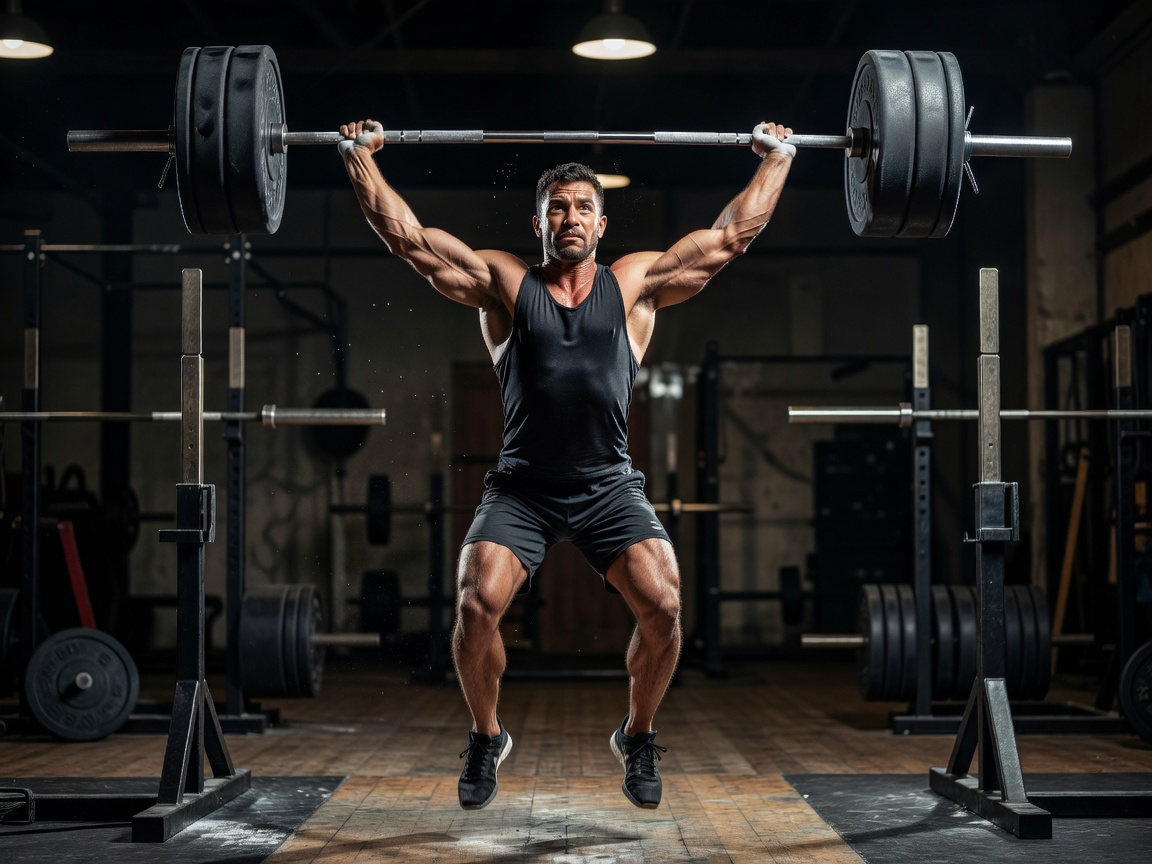
While powerlifting focuses on absolute brute strength over relatively short ranges of motion, Olympic weightlifting is the ultimate expression of explosive power, mobility, and kinesthetic awareness. The sport consists of two highly technical lifts: the Snatch, and the Clean and Jerk. Mastering these movements requires years of dedicated practice, flexibility training, and speed work.
The Snatch
The snatch is arguably the most athletic movement that can be performed with a barbell. The objective is to take the barbell from the floor to a locked-out position overhead in one continuous, explosive motion.
The lift is broken down into specific phases:
- The First Pull: From the floor to just above the knees. The goal here is not maximum speed, but positioning. The back angle remains constant, and the barbell is swept slightly backward toward the body.
- The Transition (Scoop): As the bar passes the knees, the lifter rebends the knees and brings the torso upright, sliding the bar into the hip crease.
- The Second Pull (Triple Extension): The most explosive phase. The lifter aggressively extends the hips, knees, and ankles (triple extension) while shrugging the shoulders, propelling the bar upward. The arms do not pull the weight; they merely guide it.
- The Catch: The lifter aggressively pulls themselves under the weightless barbell, receiving it overhead in a rock-bottom overhead squat position.
- The Recovery: Standing up from the deep squat to complete the lift.
The Clean and Jerk
Because the clean and jerk is broken into two distinct movements, athletes can handle significantly more weight than in the snatch. It tests a lifter's absolute power and grit.
The Clean
The mechanics of the clean's first and second pulls are nearly identical to the snatch, but with a narrower grip. Because of the narrower grip, the second pull contact point is lower, typically on the upper thighs rather than the hip crease. The lifter catches the barbell on the anterior deltoids and clavicles in a deep front squat. Exceptional wrist and lat mobility is required to rack the bar properly without the elbows dropping.
The Jerk
After recovering from the clean, the lifter must propel the bar overhead. This is done via a dip and drive.
- Split Jerk: The most common style. After driving the bar off the shoulders with the legs, the lifter rapidly splits their feet forward and backward. This allows them to drop their center of gravity quickly and get under the heavy barbell, locking out the arms. The front shin should be vertical, and the back knee slightly bent.
- Power Jerk: The feet jump out laterally into a partial squat rather than a split. It requires the bar to be driven higher but allows for a faster transition.
- Squat Jerk: Rare and requires phenomenal mobility. The lifter catches the jerk in a full overhead squat with a clean-width grip. Used notably by elite Chinese weightlifters.
Mobility Demands
You cannot perform Olympic lifts effectively without exceptional joint mobility. Common roadblocks include:
- Ankle Dorsiflexion: Necessary to keep the torso upright in the deep catch positions.
- Thoracic Extension: Required to support a heavy barbell overhead or in the front rack without the upper back collapsing.
- Shoulder Flexion and External Rotation: Crucial for the overhead squat and securing the snatch balance.
Why Train the Olympic Lifts?
Even if you have no intention of stepping onto a competitive weightlifting platform, incorporating variations of these lifts (like the power clean or power snatch) provides immense benefits. They teach the body to recruit fast-twitch muscle fibers simultaneously, translating directly to improved sprinting speed, vertical jump, and on-field explosiveness for athletes in sports like football, rugby, and track.