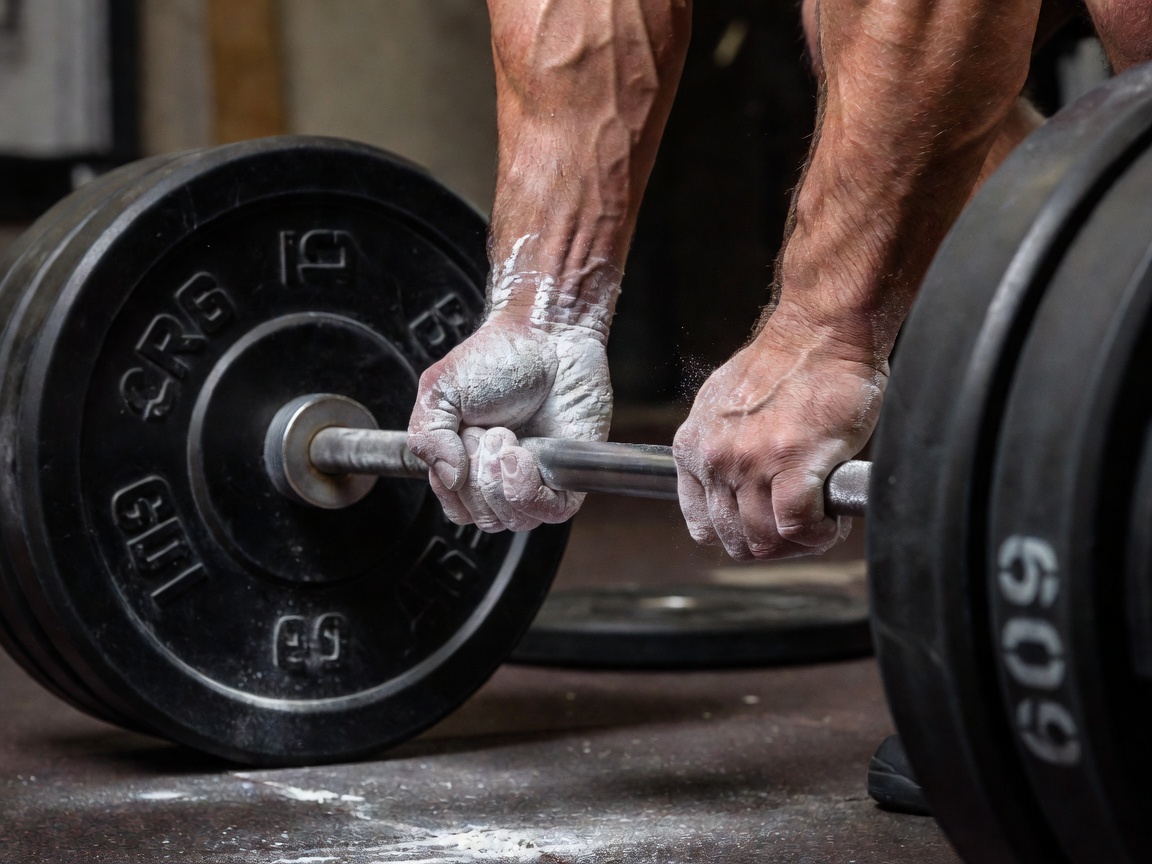
The deadlift is the purest test of raw bodily strength: a heavy weight sits dead on the floor, and you must stand up with it. It builds tremendous strength in the posterior chain—the hamstrings, glutes, erector spinae, and latissimus dorsi. Despite its primal simplicity, the mechanics of picking heavy weight off the floor safely require significant technical precision.
The Hinge Mechanic
Before loading a barbell, a lifter must understand the hip hinge. Unlike a squat, which involves maximum flexion of both the hips and knees, the deadlift is dominated by the hips. The knees bend only enough to allow the hands to reach the bar, while the hips are pushed far back, maintaining a neutral spine. The primary engine of the lift is the extension of the hips pushing forward, rather than the legs pushing down.
Stance Wars: Conventional vs. Sumo
The most visible variation in deadlifting is the stance. Neither stance is inherently "better" or "cheating"; rather, the optimal choice depends heavily on an individual's biomechanics, specifically arm span relative to torso length and hip structure.
The Conventional Deadlift
In the conventional deadlift, the feet are placed roughly hip-width apart, with the arms hanging straight down outside the legs. This setup typically results in a more horizontal back angle at the starting position.
- Pros: Excellent for developing the lower back erectors. It has a longer range of motion, which is highly beneficial for general hypertrophy and strength transfer to other sports.
- Cons: The horizontal back angle requires massive lower back strength and increases shear forces on the lumbar spine. Lifters with short arms and long torsos often struggle to maintain a neutral spine in this position.
The Sumo Deadlift
The sumo deadlift involves a wide stance with feet pointing outward, and the arms dropping straight down inside the legs. The hips start closer to the bar, allowing for a much more upright torso.
- Pros: The upright torso significantly reduces shear stress on the lower back. It also shortens the total range of motion, making it a highly efficient style for competitive powerlifting.
- Cons: Demands extreme hip mobility and places a heavy burden on the quadriceps and adductors. If the lifter cannot force their knees out over their toes, the hips will shoot back, destroying the mechanical advantage.
| Stance Type | Foot Placement | Arm Placement | Back Angle | Primary Muscles |
|---|---|---|---|---|
| Conventional | Hip-width | Outside legs | More Horizontal | Lower back, Hamstrings |
| Sumo | Very wide | Inside legs | More Upright | Quads, Glutes, Adductors |
Grip Variations
A deadlift is only as strong as the hands holding the bar. As the weight increases, grip strength often becomes the limiting factor long before the legs or back fail.
- Double Overhand: Both palms face the lifter. This is the safest grip for bicep health and excellent for building grip strength, but it will fail at heavier weights due to the bar rolling out of the fingers.
- Mixed Grip: One palm faces the lifter, the other faces away. This stops the bar from rolling, allowing for much heavier pulls. However, it creates asymmetrical tension in the back and places the supinated (underhand) arm at a slight risk for a distal bicep tendon tear if the arm is not kept perfectly straight.
- Hook Grip: An Olympic weightlifting staple where the thumb is wrapped around the bar, and the index and middle fingers are wrapped tightly over the thumb. It provides the security of a mixed grip while maintaining perfect symmetry. The primary drawback is extreme discomfort in the thumbs until nerve desensitization occurs.
Lat Engagement and "Pulling the Slack"
A common error is yanking the bar off the floor. This jolts the spine and causes form breakdown. Instead, a lifter must "pull the slack" out of the bar before the weight ever leaves the floor. This is achieved by engaging the latissimus dorsi.
By squeezing the armpits tightly (imagine crushing an orange under each arm), the lats lock the upper back into rigid extension. The lifter applies upward pressure against the bar—perhaps lifting 80% of the weight—before finally driving the floor away with their legs to break the bar loose. This creates a smooth, safe, and powerful ascent.
Whether you choose conventional or sumo, mastering the setup, understanding your biomechanics, and committing to a rock-solid core brace are the keys to a monstrous and injury-free deadlift.