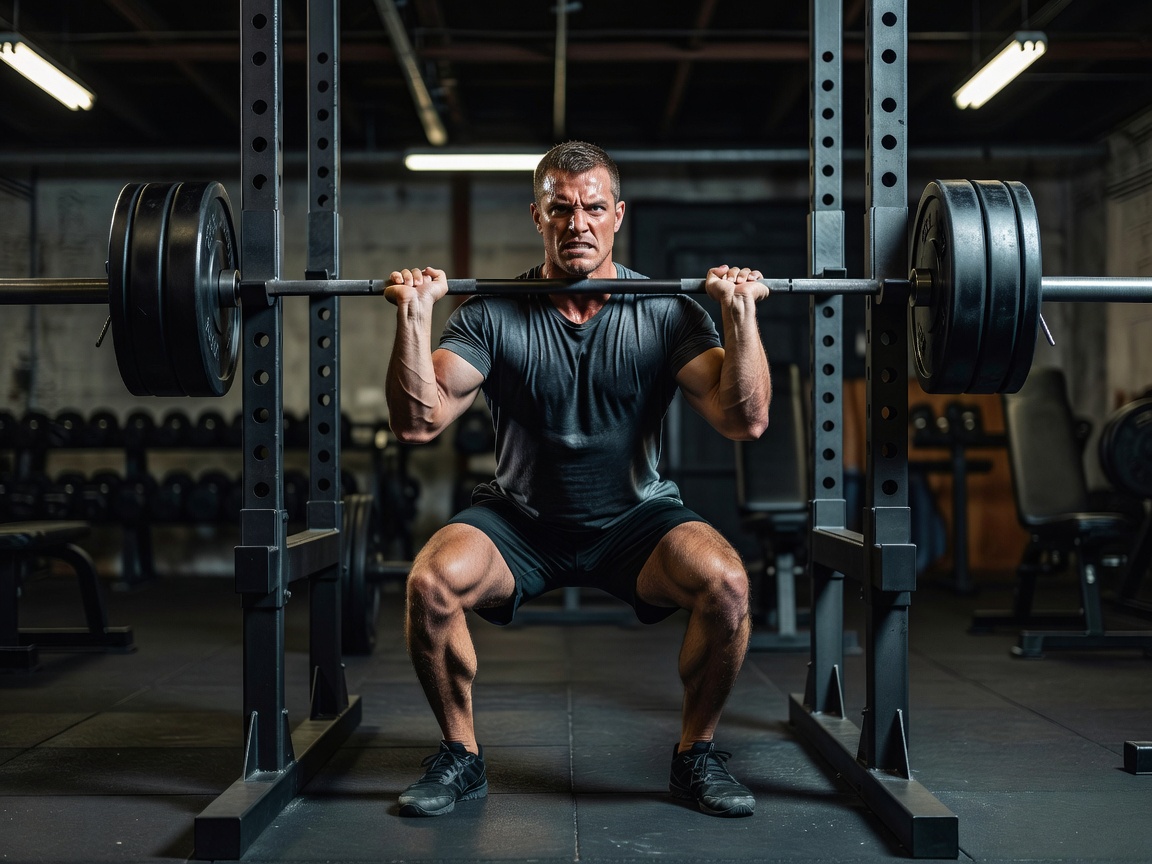
The barbell back squat is universally recognized as the foundational movement for developing lower body strength. It engages the quadriceps, hamstrings, glutes, and the entire core musculature under a heavy axial load. However, the complexity of the movement means that subtle deviations in technique can drastically alter the muscles targeted and the safety of the lift.
High-Bar vs. Low-Bar Squatting
One of the most critical decisions a lifter makes is where to place the bar on their back. This single choice dictates torso angle, knee travel, and muscle recruitment.
The High-Bar Squat
In the high-bar squat, the barbell rests on top of the upper trapezius muscles, near the base of the neck. This placement forces a more upright torso to keep the center of gravity over mid-foot. Because the torso remains upright, the knees must travel further forward, placing a greater emphasis on knee flexion and, consequently, the quadriceps. Olympic weightlifters heavily favor this style because it mimics the catch position of the clean and snatch.
The Low-Bar Squat
Conversely, the low-bar squat places the barbell further down the back, resting across the posterior deltoids and the spine of the scapula. To maintain balance over the mid-foot, the lifter must lean forward more heavily from the hips. This reduces forward knee travel and increases hip flexion. The result is a movement that heavily taxes the posterior chain (hamstrings and glutes). Powerlifters typically prefer the low-bar squat because utilizing the massive muscles of the posterior chain often allows for more absolute weight to be lifted.
| Feature | High-Bar Squat | Low-Bar Squat |
|---|---|---|
| Bar Placement | Upper Trapezius | Posterior Deltoids |
| Torso Angle | Upright | Inclined / Leaning Forward |
| Primary Drivers | Quadriceps | Glutes, Hamstrings, Lower Back |
| Typical Audience | Olympic Lifters, Bodybuilders | Powerlifters, Strength Trainees |
Stance Width and Foot Angle
There is no universally "perfect" squat stance because individual hip anatomy (specifically the angle and depth of the acetabulum) dictates comfortable range of motion. However, a general starting point is placing the heels approximately shoulder-width apart, with toes pointed outward at a 15 to 30-degree angle.
- Narrow Stance: Requires significant ankle mobility to achieve depth without the heels rising. Tends to increase quadriceps focus.
- Wide Stance: Reduces the range of motion required to hit parallel and relies more heavily on the adductors and glutes. Often used in conjunction with a low-bar position by powerlifters.
Regardless of stance width, a non-negotiable rule is that the knees must track in the same direction that the toes are pointing. Allowing the knees to collapse inward (valgus collapse) under heavy load puts severe stress on the ACL and medial knee structures.
Achieving Proper Depth
In powerlifting federations, a squat is considered valid when the hip crease drops below the top of the patella (the knee). This is commonly referred to as "below parallel." Squatting to this depth ensures maximum recruitment of the glutes and hamstrings, which actively engage to decelerate the descent and initiate the ascent.
Stopping short of parallel (a "half squat") not only reduces the training effect but can actually be harder on the knees, as the deceleration forces are absorbed entirely by the patellar tendon and quadriceps, rather than being distributed across the posterior chain.
Bracing and the Valsalva Maneuver
A rigid core is what allows the force generated by your legs to be transferred into the barbell. Without core stiffness, energy is lost through spinal flexion (rounding of the back). Lifters create this stiffness using the Valsalva maneuver: taking a deep diaphragmatic breath into the belly (not the chest) and holding it against a closed glottis, while simultaneously contracting the abdominal muscles. This creates immense intra-abdominal pressure, acting as a natural weightlifting belt that stabilizes the lumbar spine.
Common Faults and Corrections
Even experienced lifters struggle with form degradation when approaching maximal loads. Recognizing and correcting these faults is vital for long-term progression.
- Good-Morning Squat: This occurs when the hips rise faster than the chest out of the bottom position, turning the lift into a precarious good-morning exercise. This usually indicates weak quadriceps relative to the posterior chain, or a failure to maintain upper back tightness.
- Heel Lift: If the heels raise off the floor at the bottom of the squat, the lifter is shifting their weight entirely onto their toes. This is often caused by poor ankle dorsiflexion mobility or initiating the squat by breaking at the knees rather than the hips.
- Spinal Flexion (Butt Wink): A severe tucking of the pelvis at the bottom of the squat puts the lumbar spine into flexion under load. While a minor degree of movement is natural, excessive tucking often requires widening the stance or limiting depth until mobility improves.
The squat is a brutal but beautifully complex movement. Consistent practice, video analysis of your lifts, and a commitment to refining technique will yield lifelong dividends in strength and physical resilience.